From the archive — an early post, kept in its original voice.
Developing an iOS App with Biometrics
Building a rapid prototype that paired Apple's TouchID with Digitus locking hardware to secure data centers for government and DoD sites.
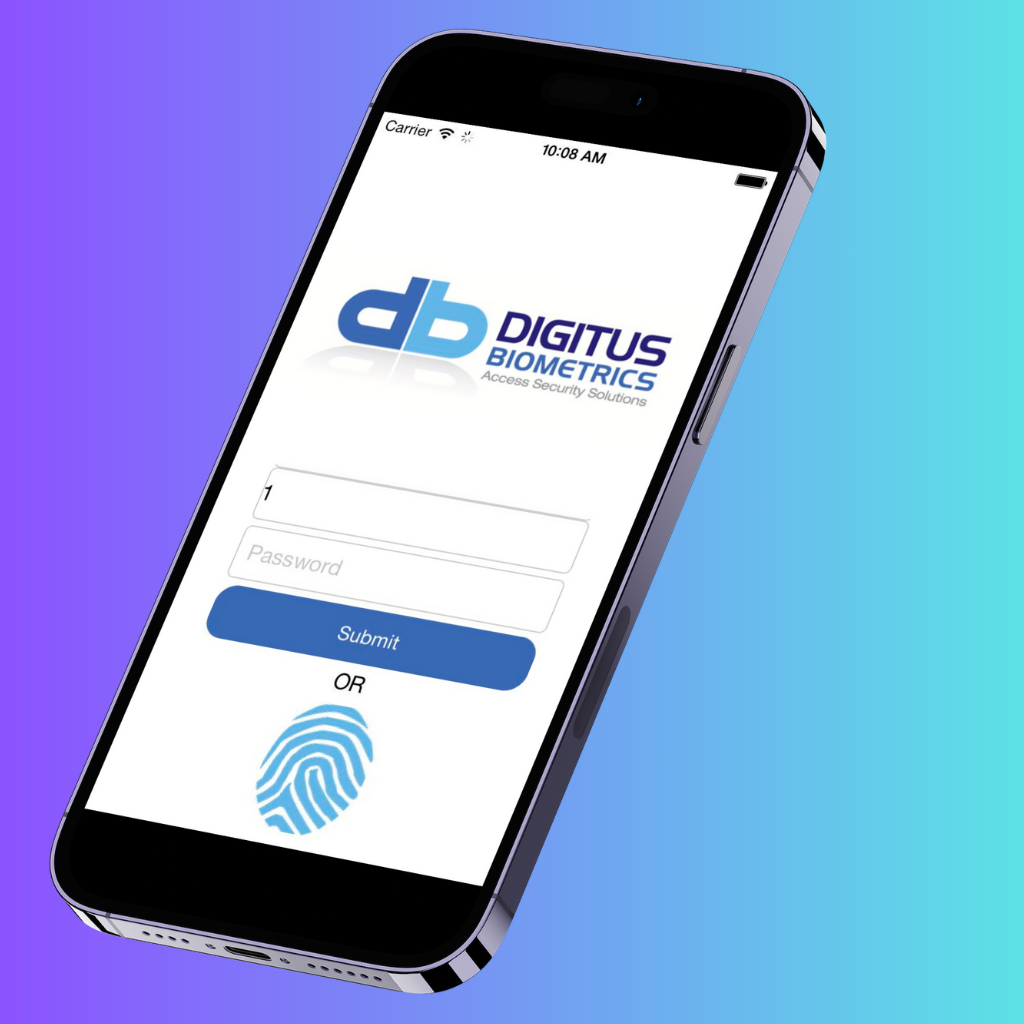
Getting the call to support a company that has agreements to protect data centers of the US and Canadian governments as well as multiple state and DoD sites was a big deal. Apple had recently come out with the ability to use your fingerprints to access the device, and Digitus — a leading provider of biometric security solutions — wanted to offer this to their customers who had field technicians accessing remote hardware. Digitus's goal was to create a prototype iOS mobile application that interfaced with their locking hardware to allow someone to unlock the cabinet using Apple's TouchID.
Requirements
- Create a rapid prototype application in 60 days or less
- Use BLE to securely communicate with Digitus locking hardware
- Work on-site with engineering to validate the approach
- Communicate via REST API to retrieve a list of a user's authorized locks
Approach
Since this was a prototype, we opted to use React Native and develop a small native iOS module that could securely communicate using an encryption key with the devices, combined with access controls via REST API. Meeting with the principal engineer and CTO of Digitus, we mapped out a straightforward UX, a flowchart of the process, and a scoping document.
After a few initial meetings, we created wireframes and began developing a native iOS module to interface with the BLE hardware. After successfully demonstrating the unlocking using BLE from this native portion, we rapidly built out the overall user interface and the REST API integration.
Technology Used
- Objective-C
- React Native
- Sketch for wireframing
- Digitus locking hardware
Final working prototype
A short demonstration of the working prototype is available on YouTube.
Subscribe
Get the next one in your inbox.
Roughly monthly. No tracking, easy unsubscribe.
Related reading
AI Answered Every Buying Question — Without the Brand's Own Website
We tested how AI assistants answered real buying questions about two client brands. Both generated useful answers. Only one brand's website helped shape them.
Why I Made Loom Archiver Free
I had a personal need, built a real tool, then did the work to see if it was a business. The honest answer was no — so I made it open source.
From Read-Only to Responsible Action: Rebuilding the Pipedrive CRM MCP Server for 2.x
Version 2.x rebuilds the Pipedrive CRM MCP Server around modern APIs, safer remote access, predictable responses, and a deliberately constrained path from read-only analysis to controlled action.